Wednesday, August 16, 2006

Military Might

Fort George from the sea showing defences


Interior of fort george showing barracks

Ive got to admit, this long summer is making me lazy. I cant even be arsed updating this much really - to be honest it does take longer than it looks if I want to include some interesting information. Anyway, I was lacking inspiration, so I thought ill try and do requests ... If you want me to put up or take a photo of anything thats a) legal [no little kids please!] and b) pratically attainable ill try my best. Just add your requests as a comment below - I may even already have something in my collection.

Due to a lack of recent updates ive given you 2 for 1. From the title you may guess there is a military theme, for this is Fort George which lies on the Moray Firth just east of Inverness. A few miles from the fort was the battlefield of Culloden, when in April 1746 the English army pretty much put an end to anymore Scottish Jacobite uprisings, in what was essentially, much like today, a religious dispute. Despite the decisive English victory, they had had enough, so as a permenant deterrent they decided to build a Huge fort in the heart of the Highlands. This was to be Fort George, an excellent piece of military design and engineering of the time to house 1600 soldiers, taking 21 years and a (today) cost of £1billion to finish. It worked, despite critics saying it never saw action, becasue surley thats the point of a deterrent? Its had many upgrades too as warfare has changed over the years from Napoleon era to the 1st and 2nd world wars and beyond, including the upgrading of guns with some Armstrong ( see "Art for Arts sake") kit. Although its suitablity to new roles has been debated, it was always considered an important stronghold.

Today you get in for the sum of £6.50. Whilst being able to walk all around the walls and some buildings, its most interesting as it still houses army facilities and staff, so you can see soldiers going about their business (smoking, pimping round in Clios, and playing loud music on the saturday afternoon i visited - much like castle leazes). Apparently you can also watch dolphins in the Moray, though i didnt see any.

Monday, August 07, 2006

Art for Arts sake?


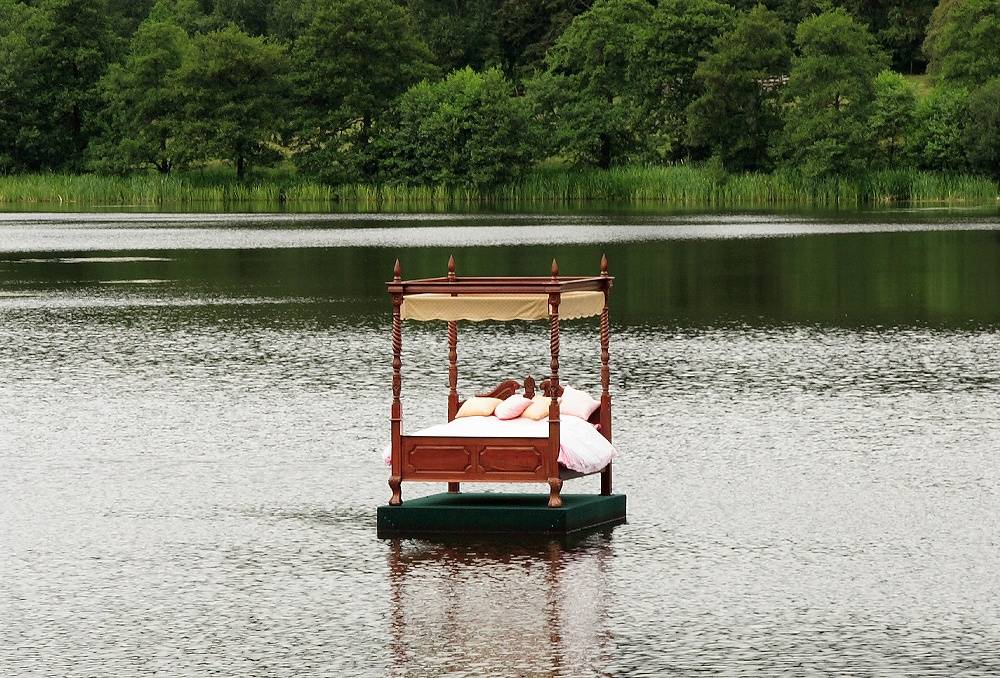
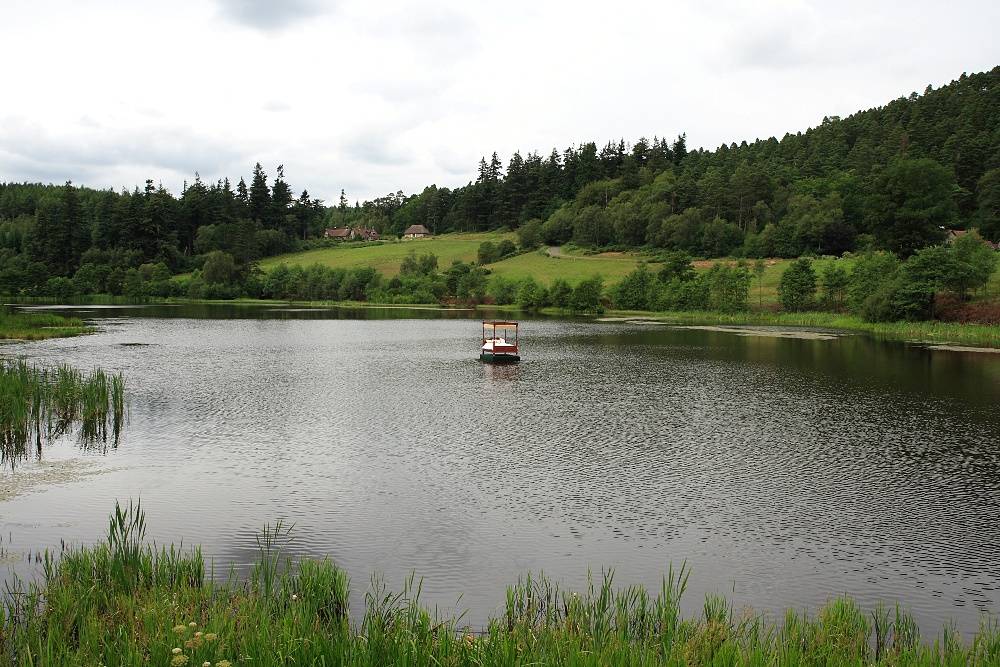
This is a double bed .... in a Lake* - which apparently makes art, and an excuse for me to use a 10CC song as the title (excellent old band if youve ever heard of them). Its not a particuarly amazing shot in any respects, but it tickled me and ive done a zoom view- click here

* When i say lake, technically i should probably say reservoir, for this is at Cragside, Lord Armstrongs country house in Northumberland. Armstrong was a Victorian industrialist, famous in the north east of England for his factories on the Tyne. These engineering facilities turned out warships and heavy guns to name a few examples, later becoming Vickers- Armstrong and now eventually part of Rolls-Royce. For the uni people, Jesmond Dene in the Newcastle suburbs was donated by Armstrong to the working classes of the "toon" for them to enjoy. His house at Cragside was revolutionary in many respects, for the "lake" was part of his hydro electricty scheme (worlds 1st) - the whole house utilising water power. Mechanically to power a lift and kitchen and household equipment, and electrically to become the first electrically lit house in the world in 1878. Funny thing is, after all these years the house needs re-wiring, so its shut for 2 years while they do it, hence the random "art" around the estate to try and make up for it.

Monday, July 31, 2006

Highlands and Islands


Ive been to Scotland quite a lot, so its fair to say I like it. Many places are amazingly beautiful if your into the water/mountains + wild/rugged combo. You have the beaches of Arisaig and the Hebridies, the jagged skyline of Cullin ridge on Skye (not neighbours), the majesty of Torridon, or bleak expanse of the far far north. Personally i believe on a perfect day you would struggle to find anywhere in the world that could match it, be it some gippo country, the far-East, the Americas or Africa. Im not saying you shouldnt go to them (it keeps here quieter), or I wouldnt find something enjoyable to do. What i am saying is sometimes you can go a lot further for a lot less reward, to me it seems crazy to go half way around the world and not even know or appreciate whats on your own doorstep. The major flaw in all this however is the most British of subjects, the Weather. Yep, Scotland can be grim - 90% of the time its wind, rain, cloud, rain, snow, wind, and extra grey - with a few midges in summer. Get clear blue skies, sun, light breeze to keep the midges off and its a world beater - just dont bet on it if your going.
Anyway, picture is taken from the promenade at Rothesay, the only real town on the Isle of Bute. It shows the £8.5million Polish built ro-ro ferry, Mv Bute, heading back to the mainland for another boat load of holidaying Glaswegians. Caledonian Macbrayne run most ferry services on the Western coast of scotland, keeping the place alive. Last week the Queen hired the Hebridean princess for her 80th birthday, but this made me chuckle, when it seems someone got it mixed up with the modern Herbrides of cal-mac when they were organising it.
Enough ramble, here is the route of my trip:

Preston > M6> border > A75/6 > Wemyss Bay > ferry > Rothesay > ferry > Cowal pensiular > A886/8003 > ferry > Tarbet > A83 > Oban > ferry > Mull > ferry > Ardnamurchan > A861/830 > Arisaig > A830, A86, A9 > Fortrose (black isle) > A9, M9, M73, M74, M6 > Preston.

Friday, July 21, 2006

One O'clock Gun


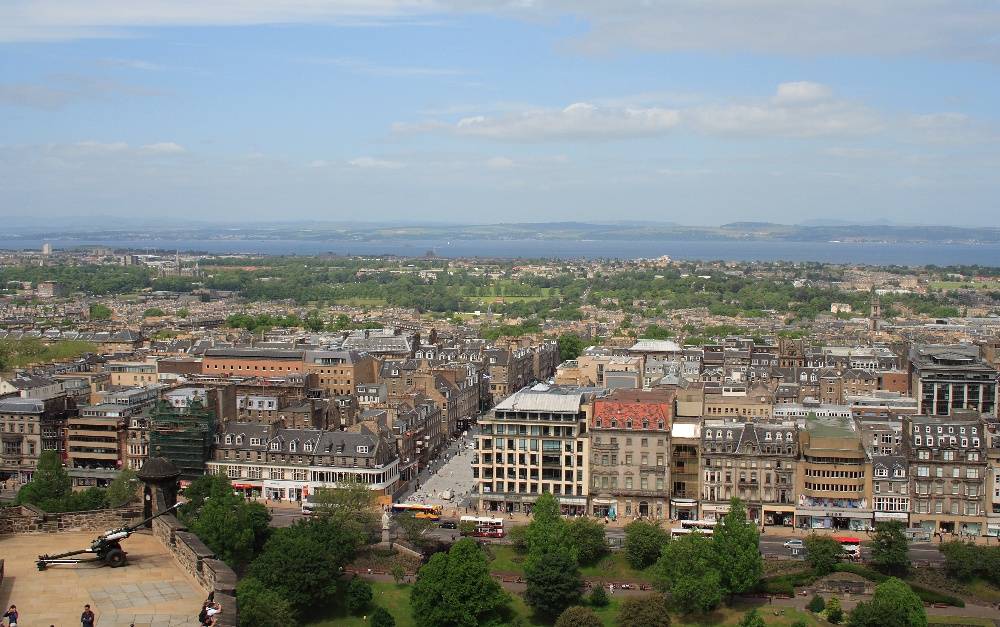
This picture shows the north Edinburgh skyline, looking to the Firth of Forth and Kingdom of Fife beyond. Taken from high on the ramparts of the fiendlishly expensive Castle, at the bottom left is the famous gun, which is fired every day at 13:00 hours. The main street visible is Princes street, containing many of the capitals modern shops, and along with Geroge street which runs parallel, forms part of what is refered to as the "new town", built in the late 1700's. I went on this little jaunt back in June with Jen, but it seemed appropriate to include now as im off to the Scottish highlands for a week. Therefore dont expect any updates for a while!

Thursday, July 13, 2006

Sunset this evening


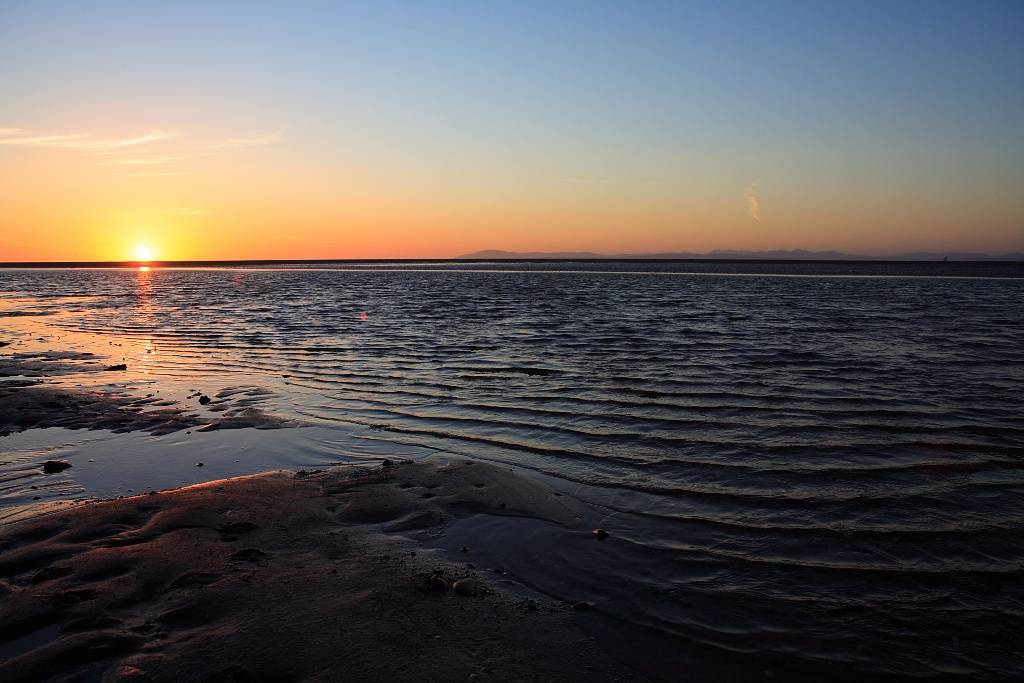
I took this picture a few hours ago, on the Lancashire coast at Fleetwood. Unlike the East coast where I spend my uni days, the sun sets over the sea on the westside, far superior in my opinon as you dont have to get out of bed. We also have the vast Morecambe bay enclosed to the north by the Lakeland fells, visible on the right horizon, which with good weather can make a beautiful scene.

In the middle of the picture, although not really visible here, lies Barrow-In-Furness. This, along with Workington up the coast (which is home to a steel plant making railway rails - due to close this year), is one of Cumbrias few (ex?) Industrial towns, responsible for turning out some fine marine engineering - Submarines. I recently read that the land across the water above, Cumbria, would be one of the poorest areas in Europe if it wasnt for the tourist income generated by the Lakes.

Friday, July 07, 2006

To the Garden of England


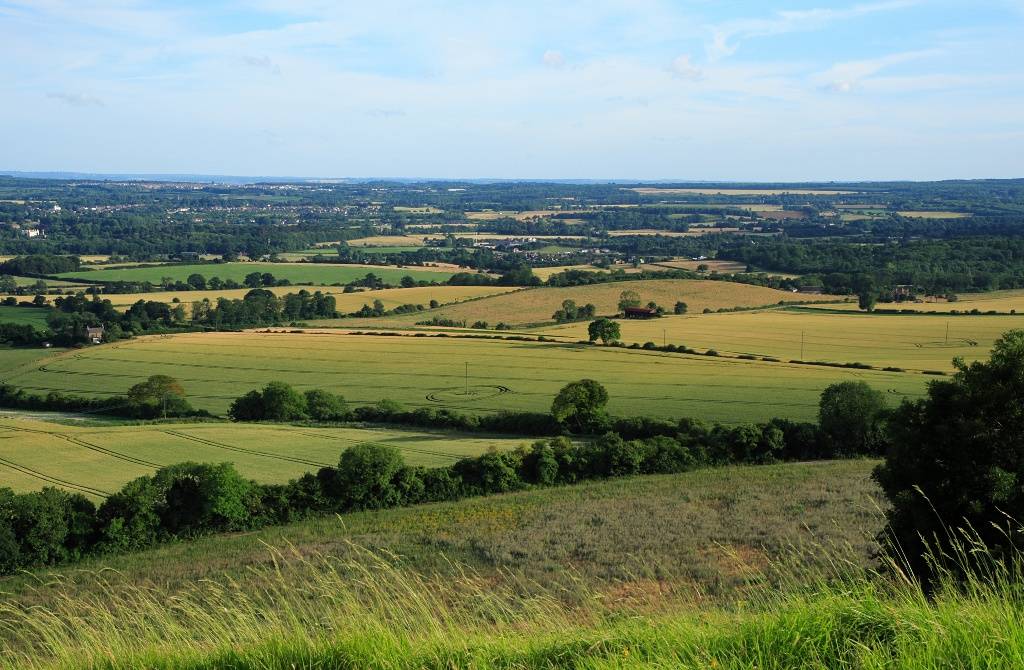
Some of you may notice ive just edited this (passing through the big smoke), as im back from an excellent weekend in Kent, visiting my Kentish Maid. The county located in the very South East of England, is the 10th Largest county (area), or 7th by population of around 1.6 million. Its highest point stands at 823ft (Betsoms Hill), and much of the North Downs chalky ridge reachs around 600ft. Its title of "garden of england" is due to the farming influence, in the form of many orchards, fields of crops, livestock, vineyards, and not forgetting hops, essential for fine Kentish Ale - visible by many pretty oast houses in the countryside used for processing the crop.


The picture above is looking South from the North Downs towards the village of West Malling and Kings Hill in the distance (left) , until recently site of a former air field seeing major activity in WWII. Nestling away behind fields and hedges the M20 crosses the picture horizontally, as does the Ashford - Otford railway line.


Monday, July 03, 2006

Time travel?


This picture shows another of my recent trips . . . back to 1913. Yes, for it is possible at the North of England open air museum, aka Beamish (opened 1971) . Here, in the countryside not far from Newcastle-Upon-Tyne, are 300 acres of various times and places in Industrial Northern England's past. The above shows a recreation of a 1913 town, with high street (all shops present), bank, park, pub, garage, terrace housing, tramway (visible) and masonic house! The inside of the buldings have been recreated and furnished too, then you are free to explore talking to actors dressed up in period costume to learn about life back then.
There is also a 1913 pit village and mine, a short antique bus ride away, where you can descend into a drift mine or visit a school and church. If thats not enough there is an old railway station (moved in whole and re-built from its 1867 site at Rowley), a farm, Victorian era country manor house, and mock up of a pioneering steam wagonway.
The museum is well worth a visit and despite being quite expensive, it is a whole day out to see everything, and £3million annual running costs have to be found somewhere.